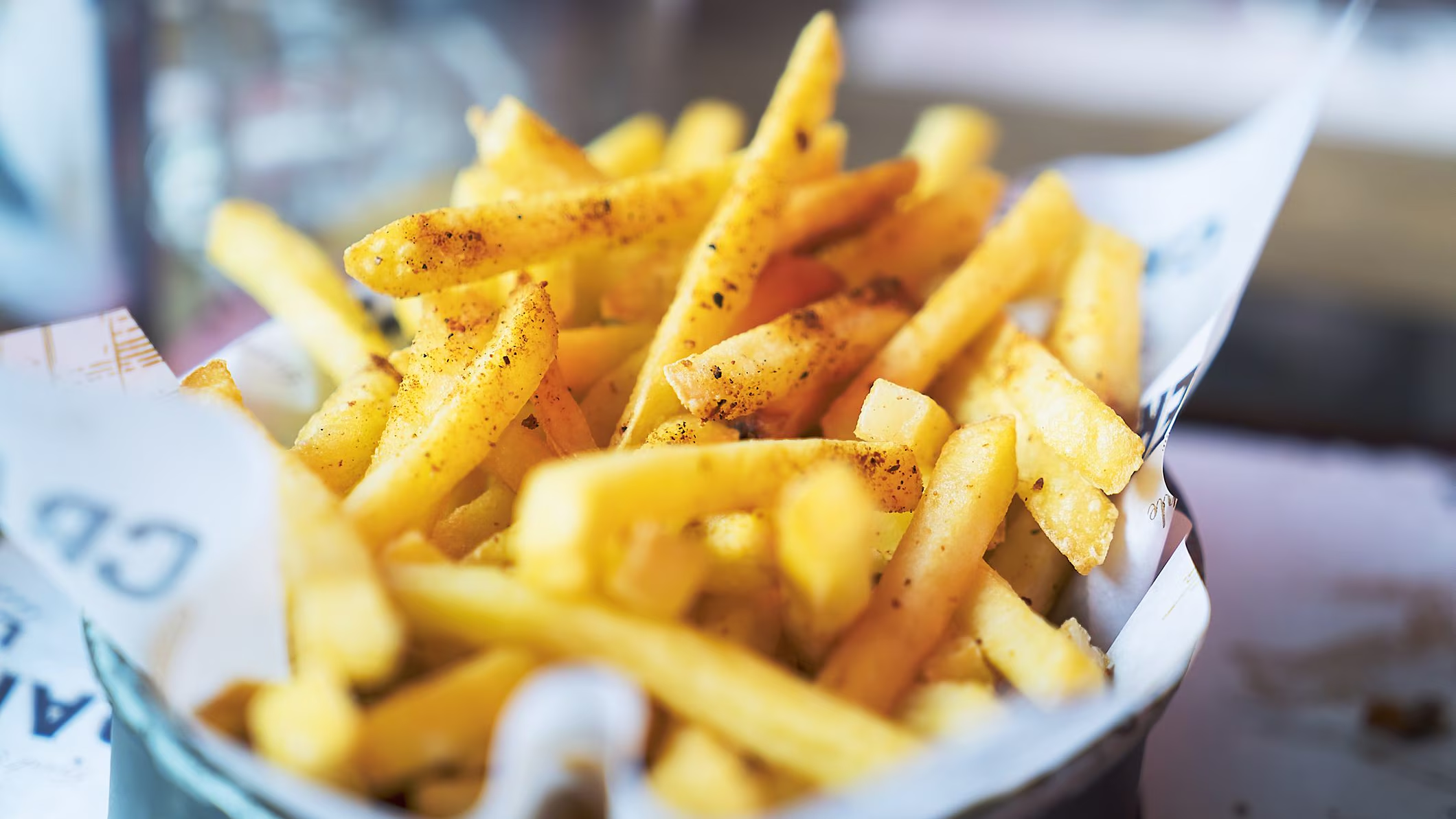
Imagine biting into a golden stick of potato that’s fluffy inside, with a crunch that echoes like a secret handshake between you and pure joy. That’s the magic of Belgian fries—not the skinny, soggy things you grab at a drive-thru, but the real deal, born from the misty valleys of Belgium. I’ve chased this taste across continents, from rainy afternoons in Bruges to my own kitchen experiments back home. If you’re like me, someone who believes food should tell a story, stick around. We’re diving deep into why these fries deserve their crown.
A Brief History of Belgian Fries
The tale of Belgian fries starts in the late 1600s along the Meuse River, where villagers fried small fish for supper. But when winter froze the waters solid, they turned to potatoes—cut thin like fish and plunged into hot fat. That’s the legend, anyway, from a 1781 manuscript that Belgian historian Jo Gérard dug up. Though some French folks claim Paris street vendors invented them in the 1700s, Belgians point to their frietkots, those humble stands that turned fries into a national obsession by the 1800s.
Historians like Pierre Leclercq argue it’s more evolution than invention, with double-frying techniques popping up in Belgian cookbooks by 1892. By World War I, American soldiers tasted them in French-speaking Belgium and dubbed them “French fries”—a mix-up that’s irked Belgians ever since. Today, with over 4,600 frietkots nationwide, fries aren’t just food; they’re a cultural glue, served at festivals, after soccer games, or just because it’s Tuesday.
What Makes Belgian Fries So Special?
Belgian fries stand out because they’re not rushed or frozen—they’re fresh-cut from starchy Bintje potatoes, the gold standard variety that’s floury and holds up to heat without turning mushy. The magic is in the double-fry: first at a low 300°F to cook the inside soft, then a quick blast at 375°F for that shatter-crisp shell. Traditionally, they’re sizzled in beef tallow or ox fat, giving a rich, nutty depth you can’t fake with vegetable oil.
What elevates them further is the serving style—piled high in a paper cone, dusted with sea salt, and paired with sauces that turn a side into a meal. It’s street food with soul, eaten hot from a stand while chatting with locals. I remember my first cone in Antwerp; the steam rising, the world pausing for that perfect bite. No wonder UNESCO is eyeing them for heritage status—it’s comfort wrapped in indulgence.
The Potato: Heart of the Fry
The right potato is everything. Bintje, bred in the Netherlands but beloved in Belgium, has just enough starch to steam inside while crisping outside. Avoid waxy new potatoes; they fall apart.
Russets work in a pinch abroad, but for authenticity, seek out firm, older spuds. Rinse and dry them well post-cut to prevent sticking—it’s a small step that saves soggy disasters.
The Double-Fry Magic
First fry at 300°F for 5-6 minutes until pale and soft; drain and cool for 30 minutes. Second fry at 375°F for 2-3 minutes till golden. This creates steam pockets for fluffiness.
It’s labor-intensive, but worth it. Pro tip: Fry in batches to keep oil steady—overcrowding drops temps and ruins texture.
The Fat Factor
Beef tallow is traditional, adding savory umami that vegetable oil lacks. It’s stable at high heat, too. For veggies, peanut oil’s neutral and effective.
Healthier? Maybe not, but moderation’s key. Render your own tallow from suet for that old-school flavor—I’ve done it, and the house smells like a frietkot heaven.
How to Make Authentic Belgian Fries at Home
You don’t need a fancy fryer; a deep pot works fine. Start with 2 pounds of Bintje or russet potatoes, peeled and cut into 1/2-inch sticks—thick enough for that signature bite, not shoestring thin.
Heat 2 quarts of beef tallow or oil to 300°F. Fry in small batches for 5-7 minutes until soft but not browned; drain on paper towels and let rest. Crank heat to 375°F, fry again 2-3 minutes till crisp. Salt immediately. Serves 4 as a side. Pair with mayo for the full effect—trust me, it’ll ruin you for fast food forever.
I botched my first batch by skipping the rest; they turned out dense. Learned the hard way: patience pays off in potato paradise.
Belgian Fries vs. French Fries: The Real Differences
| Aspect | Belgian Fries | French Fries (Typical American Style) |
|---|---|---|
| Potato Type | Bintje or starchy, thick-cut (1/2 inch) | Russet, often thinner or frozen |
| Frying Method | Double-fried in animal fat | Single-fried in vegetable oil |
| Texture | Fluffy inside, ultra-crispy outside | Crisp but often softer or uniform |
| Serving Size | Generous cone, meal-worthy | Side portion, smaller |
| Sauces | Mayo, andalouse, samourai (20+ options) | Ketchup mainly |
| Cultural Role | Street food staple, heritage claim | Fast-food icon |
Belgian fries are heartier, with that double-fry ensuring no limp bits. French fries, popularized by U.S. chains, lean lighter but miss the depth. It’s like comparing a symphony to a jingle—both tasty, but one lingers.
Pros of Belgian Fries:
- Unmatched crunch and fluff.
- Versatile with endless sauces.
- Fresher, customizable experience.
Cons:
- Time-consuming to make at home.
- Higher calorie from fat (but oh, the flavor!).
- Hard to find authentic abroad.
Where to Get the Best Belgian Fries in Belgium
Head to Brussels for Maison Antoine, a 120-year-old legend near the European Quarter—lines snake around the block for their double-fried perfection. In Bruges, Frituur No. 8 hides in a side street, serving cones with mussels that locals swear by.
Ghent’s De Frietketel wins for veggie options, while Antwerp’s Frituur No. 1 blends tradition with modern twists. Venture to Liège for Friterie de la Barrière; it’s unpretentious, with sauces like carbonnade that taste like home. Pro tip: Avoid tourist traps near Grand Place—seek frietkots with long local queues.
My trip to Saint-Gilles last year? Friterie de la Barrière hit different—salty, hot, eaten on a bench with a Trappist beer. Pure bliss, no frills.
Top Spots in Brussels
Brussels packs 1,000+ frietkots. Frit Flagey in Ixelles is a crowd-pleaser, with creamy mayo that’s addictive.
Fritland near the Grand Place offers variety, but Chez Antoine edges it for purity—go early to beat the rush.
Must-Try in Flanders
Flanders fries thicker, heartier. In Ghent, ‘t Frietketel uses local potatoes; pair with stoofvlees.
Bruges’ Chez Vincent surprises with fresh cuts amid tourists—ask for the puntzak, a boat-shaped cone.
Wallonia’s Hidden Gems
Wallonia favors bolder flavors. Namur’s river spots nod to origins; try Friterie du Pont Rouge for fish-fry vibes.
Liège’s stands like Frituur de la Gare serve with andalouse sauce—spicy, tomatoey heaven.
Pairing Belgian Fries: Sauces and Sides
No Belgian fry is naked. Classic mayo—thicker, eggier than yours—is non-negotiable. Andalouse adds paprika heat; samourai brings garlic kick.
For sides, moules-frites reigns: mussels steamed in white wine over a fry mountain. Or stoofvlees, a beer-braised beef stew that soaks up every bite.
Vegetarian? Opt for veggie croquettes or bitterballen—fried meatballs minus meat. Wash down with a crisp Stella or cherry lambic. It’s a feast that feels like a hug.
I once paired fries with frikandel—a mystery sausage—at a Ghent fair. Sketchy? Maybe. Delicious? Absolutely. Light humor: Don’t ask what’s in it; just enjoy.
People Also Ask About Belgian Fries
Why are they called French fries if they’re Belgian?
The name stuck from World War I, when U.S. soldiers in French-speaking Belgium assumed the locals were French. Belgians call them frieten or frites—simple as that.
What’s the secret to perfect Belgian fries?
Double-frying in animal fat, using starchy Bintje potatoes, and fresh cuts. Rest between fries for steam to build fluffiness.
How do Belgian fries differ from regular fries?
Thicker, double-fried for crisp exterior and soft core; richer flavor from tallow. Not the frozen, single-fry fast-food version.
What sauce goes with Belgian fries?
Mayonnaise is king, but try andalouse (mayo-tomato-pepper) or samurai (spicy mayo). Over 20 varieties exist—experiment!
Can you make Belgian fries at home?
Yes! Use russets if no Bintje, double-fry in peanut oil as substitute. Key: Don’t overcrowd the pot.
FAQ: Common Questions on Belgian Fries
Are Belgian fries healthier than French fries?
Not really—both are fried, but Belgian’s animal fat adds flavor at calorie cost. Opt for veggie oil and portion control for balance. Fresh ingredients make them feel lighter.
Where did Belgian fries originate?
Likely the Meuse Valley in the 1680s, subbing potatoes for frozen fish. Though debated, Belgium’s frietkot culture solidified them as national pride.
What’s the best potato for Belgian fries?
Bintje for authenticity—starchy, low moisture. Russets substitute well; avoid red potatoes, which get gummy.
How many frietkots are in Belgium?
Over 4,600—one per 2,500 people. They’re everywhere, from highways to historic squares, serving 1.5 million portions daily.
Why double-fry Belgian fries?
First fry cooks the inside soft; second crisps the outside without drying. It’s the fluff-vs-crunch secret no single fry matches.
There you have it—the salty, steamy soul of Belgium in every bite. Whether you’re planning a trip or firing up your fryer, these fries remind us: sometimes, the simplest things carry the deepest stories. Grab a cone, share with friends, and let the crunch speak for itself. What’s your fry memory? I’d love to hear.